What will happen if a big tech-based company hires a senior software developer using LLM and AI in the business and customer support team for better team conversations?
The main Idea of this article concerns adding senior software developers to the business and customer support teams to reduce pressure on the Technical team, create better software for end users, and reduce endless meetings to understand the situation.
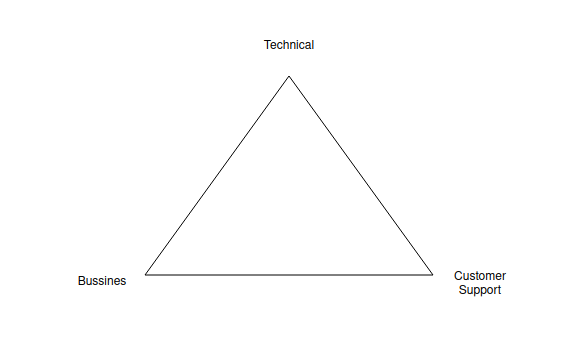
Based on what I have learned, in many big software companies, there are different teams that make software: the Technical team, the Business or Marketing team, and the Customer Support team. Believe it or not, these teams have made a brand of the company, but there are different attitude approaches in all of these teams. However, these teams have a different attitude, and their goal and actions are totally different from each other.
Topics of concern
As we know, the Technical team is concerned about codes, development, and software engineering to make better applications. On the other hand, the business or marketing team is trying to better understand customers' marks and future needs to make more money. Customer Support is concerned about bugs and client complaints. They are trying to keep persistent customers happy.
Ideal situation
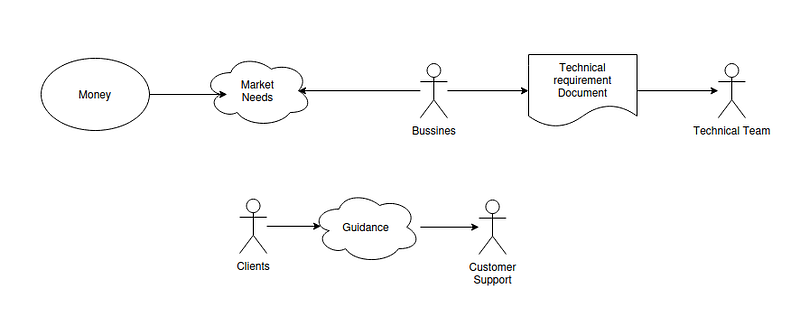
In the best situation, the business understands exactly what the market needs and writes exactly what software requirements are, and the technical team deploys them or modifies the code. In the final stage, customer support only guides customers to have a better experience.
Worst-case Scenario
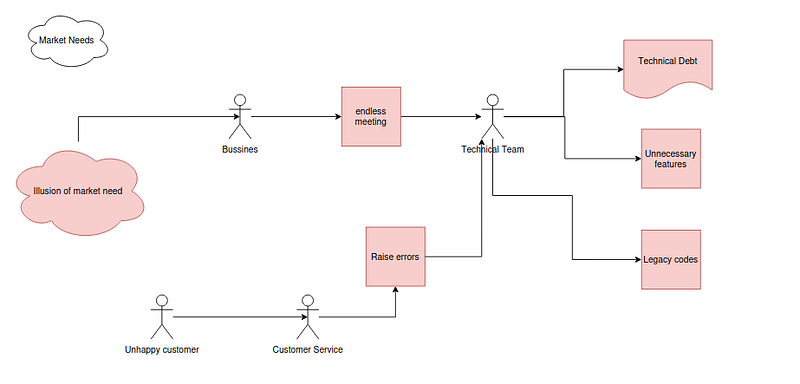
In the worst-case scenario, businesses couldn’t understand the market requirements or whatever they found could not make more money for the business. furthermore, they spend a lot of time in conversation with the head of the technical team. The business team and technical team could not understand their concerns, and they needed to set long hours for meetings. On the other hand, the Technical team have serious problems with legacy codes, and they have technical debt. They should spend unusual time on the maintenance of legacy code. Most of the time, they could not refactor all legacy codes because they should implement unessary features. In this situation, technical team guys left the company, and more code was converted to legacy codes that nobody could fix their bugs. In addition, customer support should spend a lot of time with customers to fix customer problems. They also report all cases as events to the technical team and spend a lot of time in conversations with the technical team.
Hire senior software experienced extrovert in the business team and Customer service
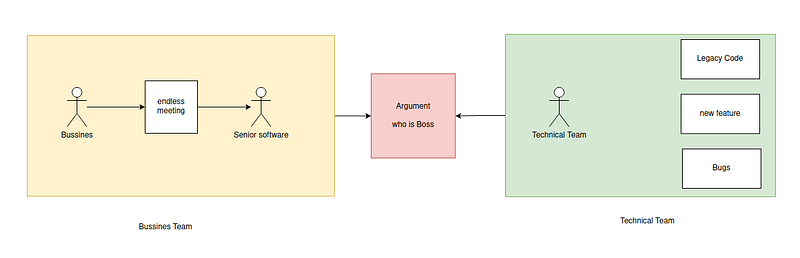
One idea to solve this complex situation is to add senior experience to the business and Customer Support team, who can understand business and technical issues. Sometimes, it would make another kind of problem, new technical guys trying to prove themselves and make another argument problem.
What is the best practice convention for communication product and technical teams in software engineering
Effective communication between product and technical teams is crucial for the success of any software engineering project. Here are some best practices to ensure smooth collaboration:
- Shared Goals and Objectives: Define common goals that both teams can work towards. This alignment helps ensure everyone is on the same page and working towards the same outcomes.
- Clear Communication Channels: Establish transparent and open communication channels. Regular meetings, such as daily stand-ups or weekly syncs, can help keep everyone informed and aligned1.
- Product Roadmaps: Develop and share a product roadmap that outlines the long-term vision and strategy for the product. This helps both teams understand the direction and priorities1.
- User-Centric Approach: Focus on meeting user needs and delivering value to customers. Integrate customer feedback into the development process to ensure the product meets user expectations.
- Feedback Loops: Implement regular feedback loops to ensure continuous improvement. This can include retrospectives, where teams discuss what went well and what could be improved.
- Collaborative Tools: Utilize collaborative tools like project management software, shared documents, and communication platforms to facilitate better coordination and information sharing1.
- Common Language: Create a glossary of terms that both developers and non-technical stakeholders can refer to, ensuring everyone is on the same page.
- Use of Visuals: Diagrams, flowcharts, and wireframes can help convey complex ideas more effectively than words alone.
By following these best practices, product and technical teams can work more effectively together, leading to better product quality and faster development cycles.
Paperwork for communication between teams
Another method for solving this problem is related to writing useless documents and old-school solutions. In this case, the technical team should spend a lot of time writing a document, and most of the time, no one will read it.
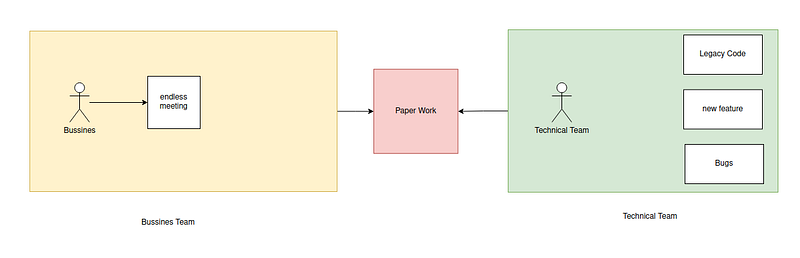
Manual Extracting data from the production and customer service teams and presenting to the technical team
This is a very common way of communication between teams. The business team instead manages the technical team, makes an analysis and statistics data based on their results, and presents them to the other team. Their analysis presents the company's status and the technical team's output. One of the disadvantages of this method is delaying the extraction and analysis of data. It would be time-consuming and doesn’t show the technical team in a short period of time, and I could not understand what the instance effect of technical team change is. But it would be useful for a long time.
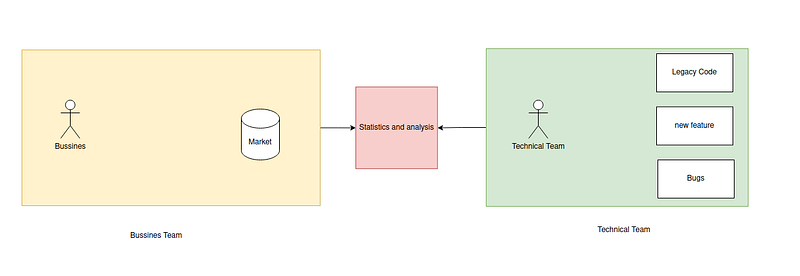
Power of AI and LLM model for making better conversations between business and technical team
In this case, it is possible to add a senior software engineer to the business and customer support teams, but their responsibility is to create an automated system to analyse the situation. They can analyse issue tracking and control project tools such as Jira, tellers, etc, and with API, get data from this platform. In addition, they can get data from GitLab and analyse technical team activities get data from customers and make online parameters to understand better situation. LLM tools such as ChatGPT and Ollama can help to analyse these processes. Then, it is possible to make conventions between teams for better conversation between teams.
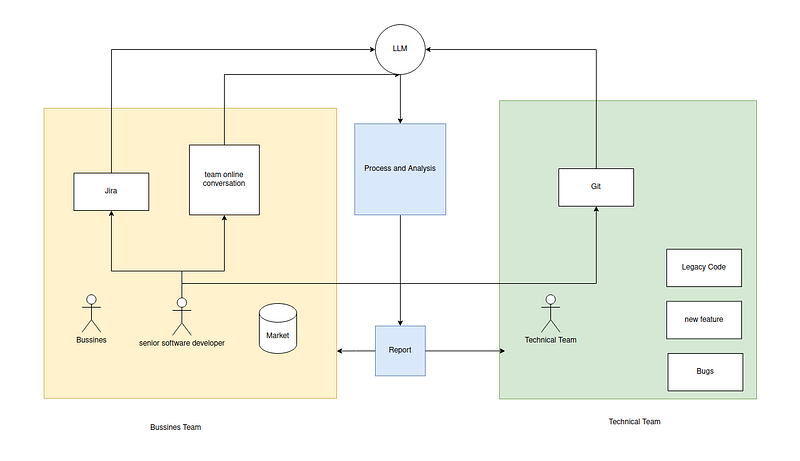
Hiring a senior software developer to engage with AI in the business and customer support team can bring several significant benefits and changes:
- Enhanced Efficiency: AI can automate routine tasks, allowing the team to focus on more complex issues. This can lead to faster response times and improved customer satisfaction.
- Improved Customer Experience: AI can provide personalized responses and solutions based on customer data, leading to a more tailored and satisfying customer experience.
- Data-Driven Insights: A senior developer can leverage AI to analyze customer interactions and feedback, providing valuable insights that can help improve products and services.
- Innovation and Scalability: AI can help the company develop innovative solutions and scale operations more efficiently. This can include chatbots for customer support, predictive analytics for business decisions, and more.
- Skill Development: The team will have the opportunity to learn and work with cutting-edge AI technologies, which can be a significant motivator and help in retaining top talent12.
- Cost Savings: Automating repetitive tasks with AI can reduce operational costs and free up resources for other strategic initiatives3.
Overall, integrating AI with the expertise of a senior software developer can drive significant improvements in both business operations and customer support.
In conclusion, integrating senior software developers with AI and LLM capabilities into business and customer support teams can significantly transform organizational dynamics in tech companies. This approach addresses common communication challenges between technical, business, and customer support teams. By leveraging AI for data analysis, automating routine tasks, and providing data-driven insights, companies can enhance efficiency, improve customer experiences, and foster innovation. This strategy not only reduces pressure on technical teams but also promotes better understanding across departments, potentially leading to more effective product development and customer satisfaction. While challenges may arise, the benefits of this integration — including cost savings, scalability, and improved decision-making — make it a compelling solution for modern tech companies seeking to optimize their operations and stay competitive in a rapidly evolving market.
Visit us at DataDrivenInvestor.com
Subscribe to DDIntel here.
Join our creator ecosystem here.
DDI Official Telegram Channel: https://t.me/+tafUp6ecEys4YjQ1