My Experience After Four Years of Migration from PHP to Golang Language
My journey from PHP to Golang has been one of growth, adaptation, and continuous learning. While PHP and Laravel served me well in the early stages of my career, the demands of modern software development required me to explore new technologies. Golang’s performance, simplicity, and scalability have made it an excellent choice for building high-performance, distributed systems. However, the transition also highlighted the importance of understanding software engineering principles and design patterns.
As a seasoned software developer with over five years of experience in PHP and Laravel, I’ve witnessed the evolution of web development firsthand. My journey began as a junior PHP developer, and over time, I grew into a senior role, working on complex systems, handling high TPS (transactions per second), and collaborating with teams to deliver robust solutions. However, as the demands of modern software development evolved, I found myself at a crossroads. The limitations of PHP and Laravel in handling large-scale, resource-intensive applications led me to explore new technologies. This article chronicles my transition from PHP to Golang, the challenges I faced, and how this shift not only improved my technical skills but also boosted my career.
The PHP Years: Rapid Development with Trade-offs
Laravel and CakePHP: The Good Parts
My journey began with PHP frameworks, particularly Laravel and CakePHP. These frameworks excel in several areas:
- Rapid development capabilities, especially with CakePHP’s scaffolding
- Built-in MVC architecture that promotes organized code structure
- Extensive ecosystem of libraries and packages
- Strong community support and comprehensive documentation
- Quick setup for basic CRUD operation
When I started my career as a PHP developer, frameworks like CakePHP and Laravel were my go-to tools. CakePHP, in particular, stood out for its rapid development capabilities. I remember building entire websites in less than a week, thanks to its scaffolding features, built-in ORM, and convention-over-configuration approach. Laravel, on the other hand, offered a more structured and maintainable way to build applications, with its elegant syntax, robust ecosystem, and strong community support.
However, as my projects grew in complexity, I began to encounter the limitations of these frameworks. While they were excellent for small to medium-sized applications, they struggled to handle high TPS and large-scale systems. Dockerizing PHP applications, for instance, became a nightmare due to dependency management and the resulting large image sizes. Additionally, the monolithic nature of Laravel made it difficult to scale for microservices architectures.
One particularly memorable project involved building complete websites within a week using CakePHP. The framework’s scaffolding and conventions made it possible to quickly deliver functional applications for clients, especially when working in an agency setting.
Limitations Emerge at Scale
However, as projects grew in complexity and scale, several limitations became apparent:
- Performance issues when handling high transaction volumes (TPS)
- Resource-intensive operations, particularly with image processing
- Challenges with containerization and Docker implementation
- Limited efficiency in handling microservices architecture
- Memory management concerns, especially with PHP-FPM
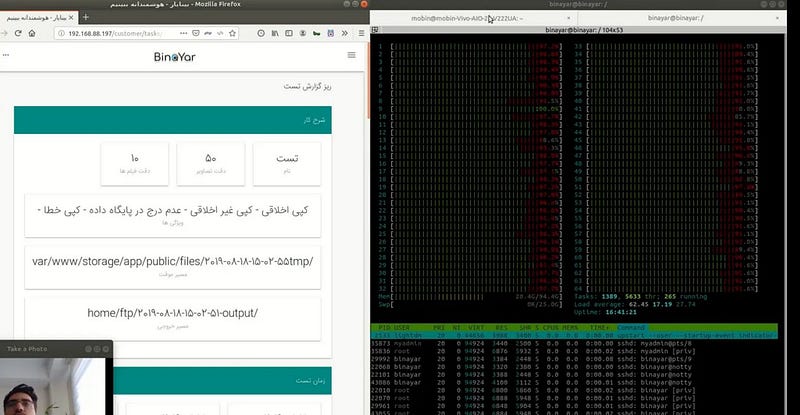
The turning point came when I joined a larger company that required handling massive amounts of data, including image processing and AI-driven tasks. PHP and Laravel were no longer sufficient for these demands. The company encouraged me to explore Golang, a language known for its performance, concurrency, and efficiency. At first, the transition was daunting. Golang’s simplicity and lack of a built-in framework like Laravel meant I had to dive deep into software engineering principles, design patterns, and architectural best practices.
The Transition to Golang: A New Paradigm
Why Golang?
The decision to transition to Golang came from experiencing these limitations firsthand. Golang offered solutions to many of the challenges faced with PHP:
- Superior performance and efficient resource utilization
- Excellent support for concurrent processing through goroutines
- Built-in support for modern development patterns
- Better suited for microservices architecture
- More efficient memory management
One of the first projects I worked on with Golang was a COVID-19 prediction application that processed unstructured data from millions of users daily. We switched from SQL to MongoDB to handle the diverse data types, and Golang’s performance and concurrency model allowed us to process this data efficiently. The experience was transformative. I realized that Golang’s lightweight nature and efficient resource usage made it ideal for microservices and high-performance applications.
Real-World Impact
One of my first Golang projects involved building a COVID-19 analysis application that could process data for over 8 million people daily. This scale of operation would have been challenging with PHP but was handled efficiently with Golang.

The Learning Curve: More Than Just Syntax
Design Patterns and Architecture
Moving to Golang requires a deeper understanding of software engineering principles:
- Solid grasp of SOLID principles
- Understanding of dependency injection
- Knowledge of various design patterns (Strategy, Facade, Builder)
- Experience with different architectural approaches
- Ability to make informed decisions about application structure
Unlike PHP frameworks that often dictate architecture through conventions, Golang’s flexibility requires developers to make more architectural decisions independently.
Golang’s advantages quickly became apparent. Its goroutines and channels made concurrency handling a breeze, allowing us to process thousands of requests simultaneously without significant resource overhead. The language’s simplicity and clean syntax made it easy to write and maintain code, while its static typing helped catch errors early in the development process.
Microservices Considerations
Golang’s strengths in microservices architecture become evident when:
- Managing multiple services (handling 200+ microservices)
- Implementing inter-service communication
- Managing distributed systems
- Handling high-concurrency scenarios
- Implementing domain-driven design
One of the most significant advantages of Golang is its suitability for microservices. Unlike Laravel, which enforces a specific structure, Golang offers flexibility in designing systems. For example, in one project, we built a pipeline using Kafka to handle job processing across multiple microservices. Golang’s lightweight nature allowed us to run hundreds of microservices on a single machine, reducing infrastructure costs.
Career Impact and Professional Growth
Knowledge Expansion
The transition to Golang catalyzed significant professional growth:
- Deeper understanding of software engineering principles
- Enhanced architectural decision-making abilities
- Improved problem-solving skills
- A better grasp of system design concepts
- Increased value in the job market
Challenges of Golang: Learning Curve and Design Patterns
However, Golang is not without its challenges. The language’s flexibility means that developers need a deep understanding of design patterns and software architecture principles. Unlike Laravel, which provides a clear structure out of the box, Golang requires you to design your system from the ground up. This meant I had to learn about SOLID principles, dependency injection, and various design patterns like Strategy, Facade, and Builder.
Another challenge was maintaining consistency across a large number of microservices. In one project, we had over 400 microservices, each with its own structure and design. While Golang’s flexibility allowed us to tailor each service to its specific needs, it also introduced inconsistencies that made maintenance more challenging. To address this, we implemented guidelines and best practices to ensure a consistent approach across services.
Career Growth and Continuous Learning
- Increased income opportunities
- Better job prospects
- More challenging and rewarding projects
- Enhanced market value as a developer
Transitioning to Golang was not just a technical shift; it was a career-defining move. As I deepened my understanding of software engineering principles, my value as a developer increased. My income grew, and I was able to take on more challenging projects, such as building AI-driven systems and handling terabytes of data in real time. This experience taught me that continuous learning and adaptability are crucial in the ever-evolving software industry.
Some people believe that career growth is not tied to a specific language but to the individual’s willingness to learn. While this is true, I found that learning Golang forced me to expand my knowledge beyond just writing code. I had to understand the underlying principles of software design, architecture, and system scalability. This holistic approach to development has made me a more well-rounded engineer and opened up new opportunities for career advancement.
Conclusion
The journey from PHP to Golang represents more than just a language transition — it’s a pathway to becoming a more well-rounded software engineer. While PHP frameworks excel in rapid development and conventional web applications, Golang opens doors to building more complex, scalable systems.
For developers considering a similar transition, remember that the learning curve, while steep, brings substantial rewards in terms of technical capability and career growth. The key is to embrace the challenge of learning not just a new language, but the deeper principles of software engineering that come with it.
The most valuable lesson from this journey is that staying adaptable and continuously learning new technologies isn’t just about keeping up with trends — it’s about growing as a professional and opening doors to new opportunities in software development.
Thank you for being a part of the community
Before you go:
- Be sure to clap and follow the writer ️👏️️
- Follow us: X | LinkedIn | YouTube | Newsletter | Podcast
- Check out CoFeed, the smart way to stay up-to-date with the latest in tech 🧪
- Start your own free AI-powered blog on Differ 🚀
- Join our content creators community on Discord 🧑🏻💻
- For more content, visit plainenglish.io + stackademic.com